The Supreme Audit Institution of Somalia has recorded steady, verifiable progress between 2023 and 2024, according to the official AFROSAI-E Monitoring and Evaluation Year-End Reports. These reports confirm improvements in legal foundations, internal systems, public engagement, and regional cooperation. The progress reflects real institutional change supported by national reform and regional validation. At the same time, the reports and institutional practice recognize that improvement is a continuous process and that stronger systems require sustained leadership, innovation, and learning.
A significant milestone was reached in September 2023 when Somalia enacted a new Audit Law. This law replaced a framework that had regulated the institution for more than five decades. AFROSAI-E confirmed this reform and documented its impact on institutional strength. The new law strengthened the mandate of the Office of the Auditor General by formalising authority over internal operations, organisational structure, and reporting lines to Parliament. This legal shift created a more stable foundation for professional audit work and public oversight. It remains one of the most important structural achievements of the period.
AFROSAI-E reports from 2023 and 2024 also confirm that Somalia received structured institutional support in quality management, leadership development, strategic planning, communication, and stakeholder engagement. These areas of support led to practical results such as improved internal review systems, better audit supervision, and stronger documentation standards. Audit teams moved toward clearer planning structures and more disciplined working methods. These changes strengthened the credibility of audit outputs and increased internal accountability.
Stakeholder engagement improved in a measurable way. The 2024 report confirms that Somalia received direct regional support in communication and stakeholder engagement. This support strengthened how the institution works with Parliament, government entities, and development partners. Communication practices became more consistent and structured, with clearer messaging and more systematic coordination with key stakeholders. At the same time, stakeholder needs continue to require further attention, particularly in strengthening how the institution measures, documents, and reports on the real impact of its audit work. These practices are now integrated into the institution’s working approaches and continue to be refined as part of ongoing institutional development.
Public financial management oversight also improved. The 2024 AFROSAI-E report confirms that Somalia produced and issued public audit outputs related to public financial management. This showed a shift from internal reform toward visible public accountability. These outputs are documented in regional records and demonstrate the use of improved systems, skills, and professional standards.
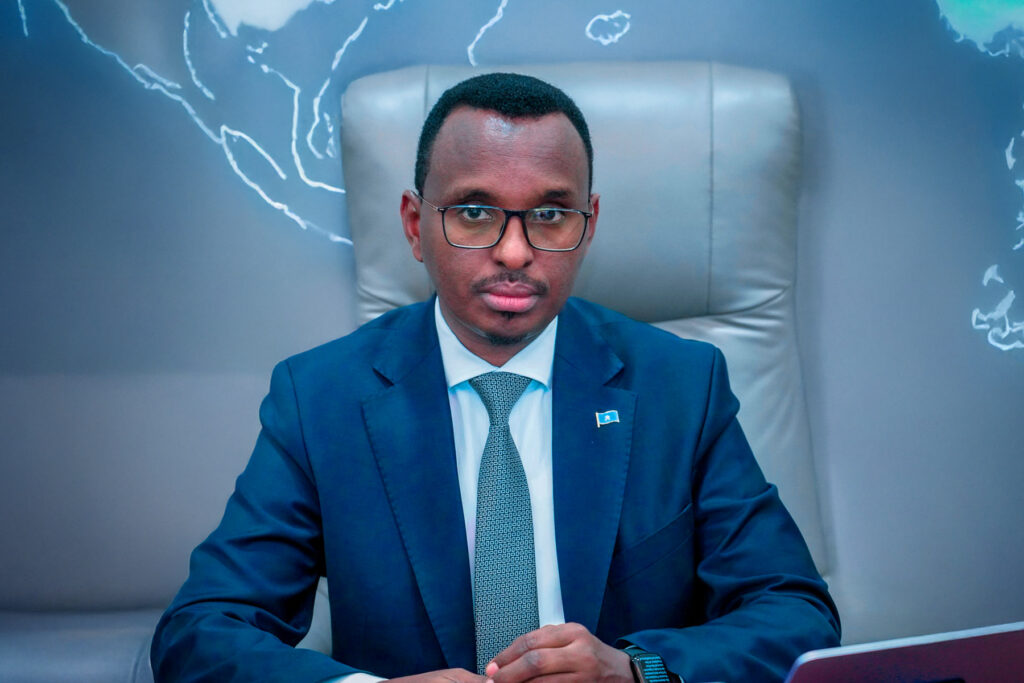
Leadership has been a central driver of these developments. The role of the Auditor General, Ahmed Isse Gutale, has been widely recognised internally for providing strong institutional support, stability, and direction during this period of reform. His leadership approach encourages innovation, learning, and collaboration. He has supported new initiatives, tested new working methods, and promoted professional development across the institution. Staff have been encouraged to improve systems, strengthen discipline, and adopt better practices. This supportive leadership style helped sustain reform momentum during a challenging governance environment.
At the same time, the institution acknowledges that progress does not eliminate the need for further improvement. Systems require continuous refinement. Skills require ongoing development. Resources remain constrained. The leadership of Ahmed Isse Gutale continues to promote a culture that accepts these realities and encourages adaptive solutions rather than complacency. This approach supports institutional resilience and long-term sustainability.
Today, SAI Somalia operates under a modern legal framework, applies stronger internal quality controls, produces public audit outputs, and engages stakeholders through more structured processes. These achievements are verified by independent regional monitoring reports. They also reflect the influence of stable and supportive leadership. While progress is visible, the institution remains focused on continuous improvement, innovation, and responsible growth under the guidance of the Auditor General.