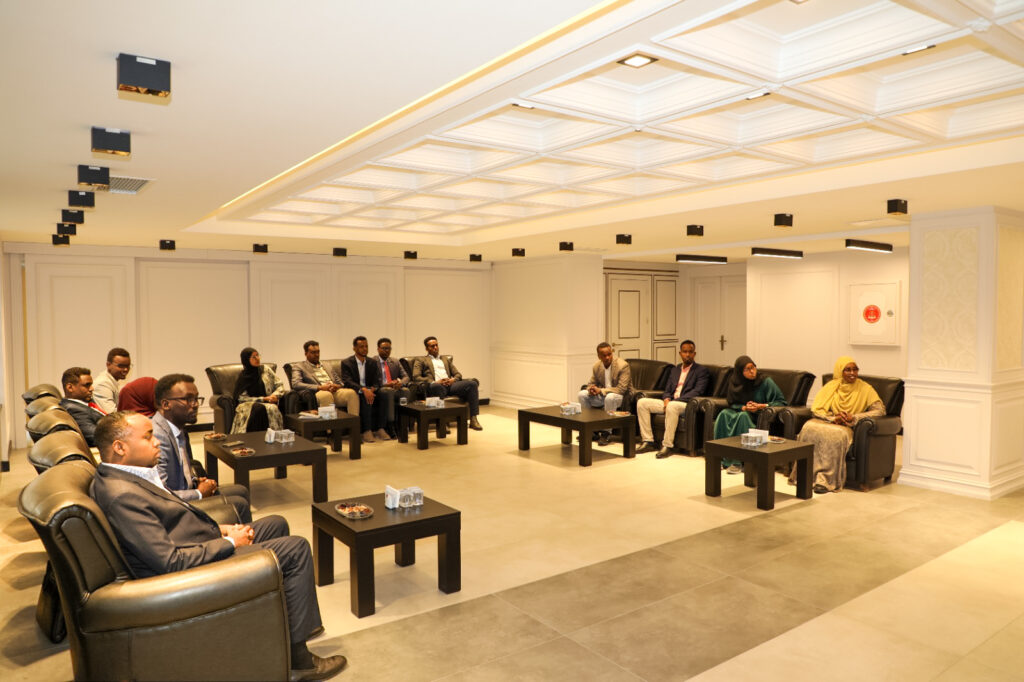
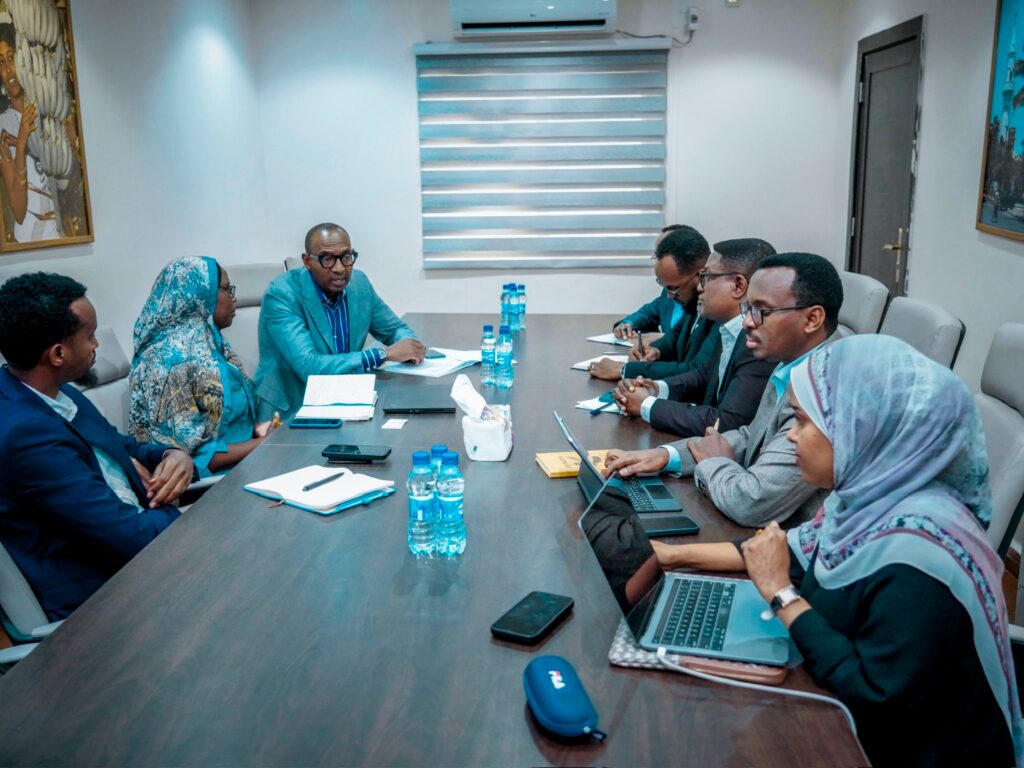
Mogadishu, Somalia, November 12, 2025: In a major step toward strengthening accountability and good governance across Somalia, the Office of the Auditor General of the Federal Republic of Somalia (OAGS) held a high-level meeting with senior representatives from the United Nations Office on Drugs and Crime (UNODC) and the United Nations Development Programme (UNDP).
The OAGS, UNODC, and UNDP discussed reinforcing cooperation in Corruption Risk Management (CRM), a core pillar in preventing, detecting, and mitigating corruption within public institutions. Participants exchanged insights on practical strategies to enhance transparency, strengthen oversight mechanisms, and promote ethical conduct across government operations.
Auditor General H.E. Ahmed Isse Gutale underscored the need for unified action to fight corruption and build resilient institutions, stating “good governance begins with the ability to identify, understand, and manage corruption risks before they undermine public trust”.
He reaffirmed OAGS’s commitment to modernizing its oversight capabilities, noting the institution’s ongoing initiatives, including updated audit methodologies, improved internal controls, and enhanced cooperation with the Federal Member State Offices of the Auditor General (FMS-OAGS). The Deputy Auditor General and senior OAGS officials also participated in the meeting, signaling a strong internal commitment to institutional reform.
Representatives from UNODC and UNDP welcomed OAGS’s proactive leadership and pledged continued support in strengthening Somalia’s governance frameworks. The partnership aims to translate policy dialogue into concrete action through joint initiatives, technical support, and capacity-building programs designed to embed corruption risk management in all layers of public administration.
This collaborative effort comes at a critical time, as Somalia works to reinforce public trust, foster responsible investment, and ensure that national resources are managed efficiently for the benefit of citizens. Experts note that effective CRM practices not only deter corruption but also improve service delivery, enhance accountability, and contribute to long-term stability and sustainable development.
For ordinary Somalis, a strengthened anti-corruption framework means more equitable management of public funds, improved access to essential services, and greater confidence in state institutions.
The meeting concluded with a shared commitment to deepen cooperation and adapt support to Somalia’s evolving governance needs — marking a promising step toward a more transparent and accountable public sector.